
2024 in brief
A decade of digitisation. A seamless transition behind the scenes of our archive system. A revamped knowledge base. An additional art platform under our wing. And, of course, a spectacular iPRES conference. These are just a few of the highlights we remember from last year – but 2024 also had its bumps along the way. Read all about it in this concise annual overview!


Digitisation, digital preservation and management
We collaborated with 184 content partners in culture, media and government in 2024. They entrust us with their content, for example to digitise it. Safeguarding their archival treasures – often on deteriorating or increasingly unreadable media – is essential if we want to form a picture of yesterday and today for the future.
On the audiovisual stage
In 2024, it was exactly a decade since we embarked on our digitisation journey of Flemish audiovisual heritage.

Ten years and 550,000 carriers later, nearly 90% of the audiovisual material on our radar has a digital copy. You can check the overview here. But this doesn’t mark the end of our efforts on this front – as the analogue audiovisual collections of our content partners continue to grow, we are continuing to meet their digitisation needs by securing a mix of media formats in smaller digitisation projects. Last year, we bundled eight audio formats into an audio combo – resulting in 7,805 digitised carriers from 25 different content partners.
Film digitisation requires a different approach. Fortunately, we can rely on CINEMATEK to register and – when necessary – preserve the analogue film collections of our content partners. We prioritise digitising the most at-risk, and 2024 was no different: 800 affected copies were given a new digital life.
From canvas to (giga)pixel
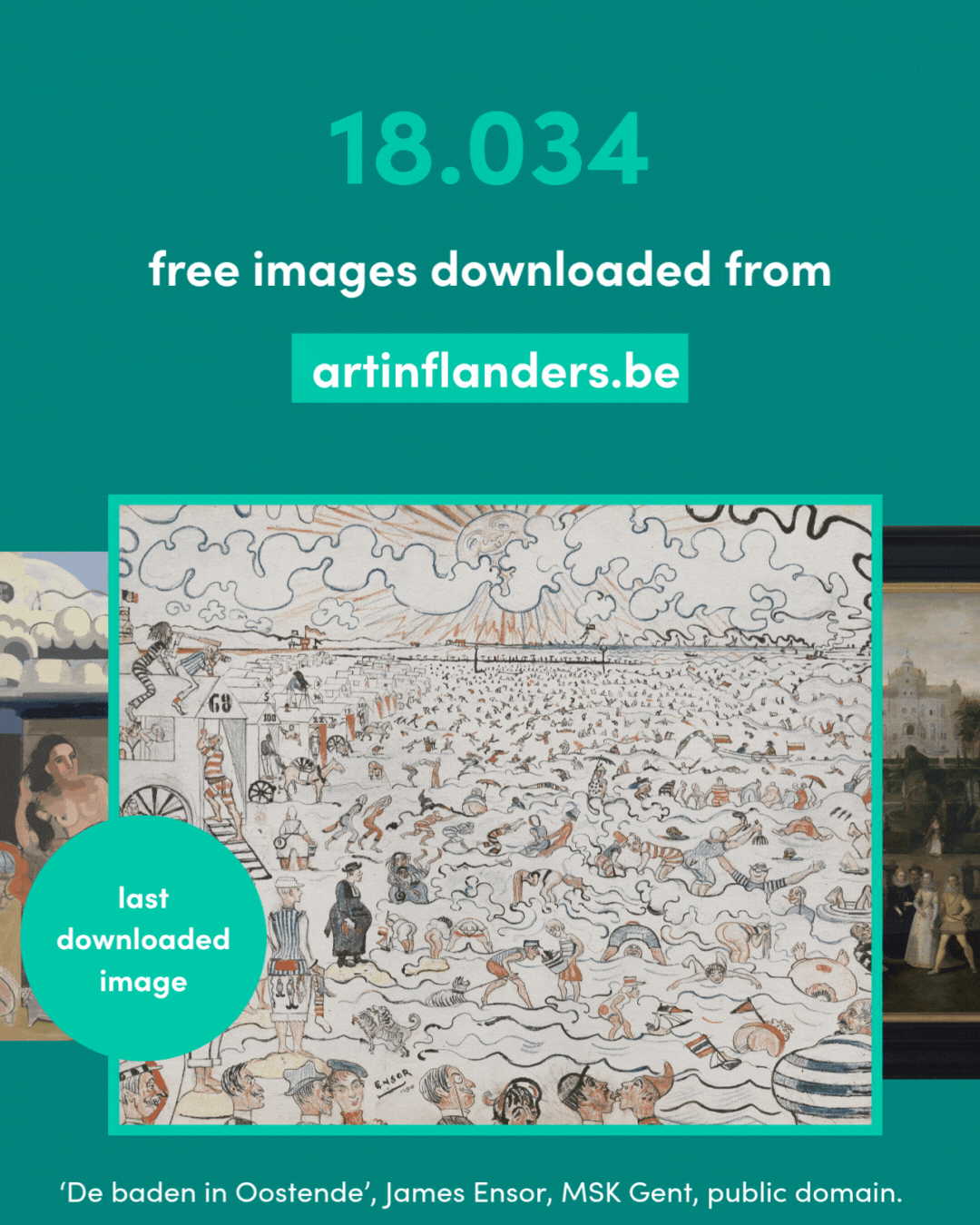
Click! Non-moving images also deserve a digital life. In 2024, we once again enlisted specialised photographers to capture 439 artworks and heritage objects from 11 different museums and heritage institutions. You can admire the results on our art and heritage image database, artinflanders.be.
Some collection pieces are best viewed from every angle. After previously delving into 3D digitisation on a project basis, it took a prominent place in our services in 2024 (and 2025). Last year, we scanned 46 sculptures and masterpieces from four different partners from head to toe – ready for a digital second life.
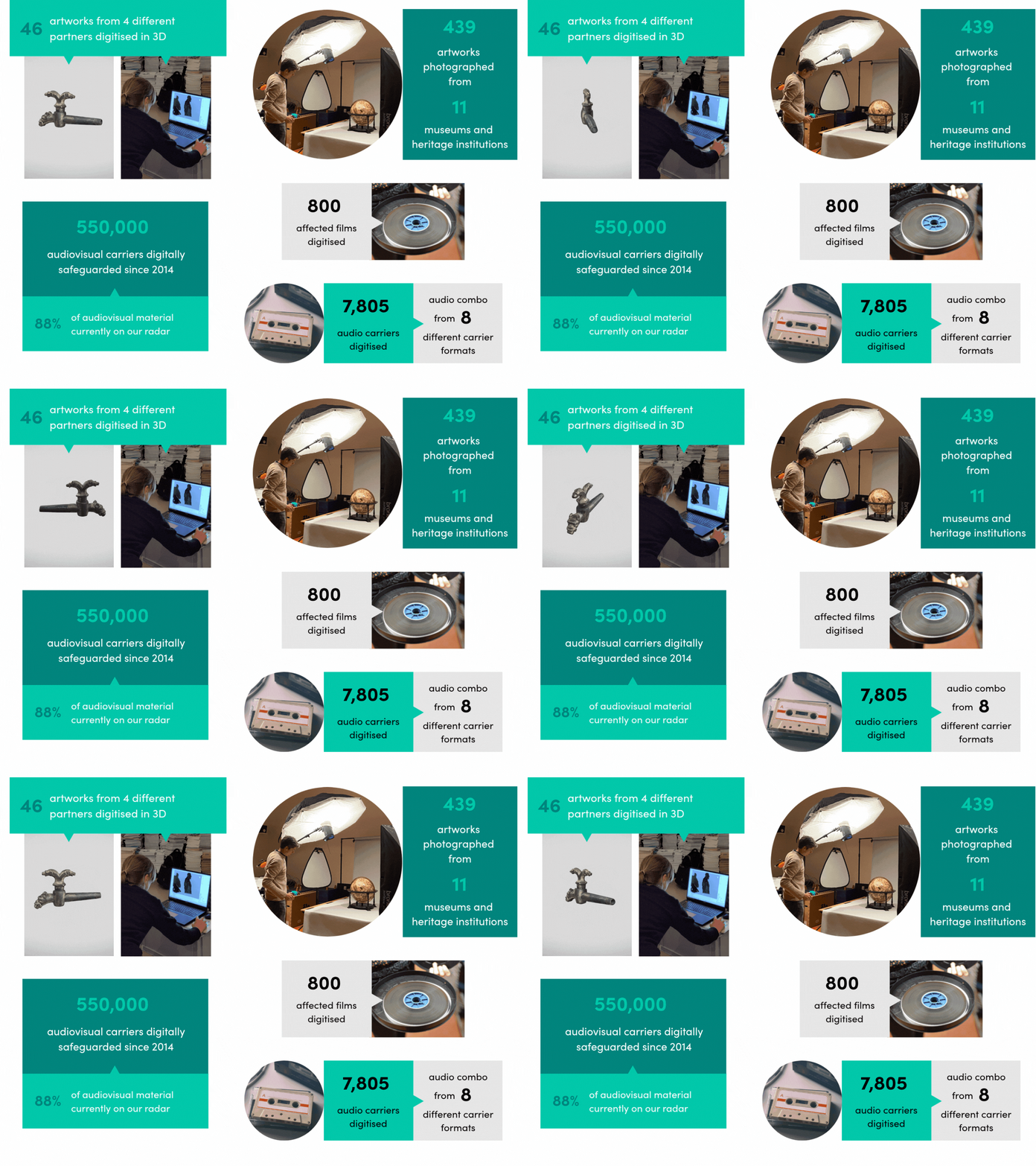
3D-model: 'Tapkraan', collection Abdijmuseum Ten Duinen. Other images: © meemoo
Safe and sound
A digital file doesn’t guarantee sustainable preservation, however. Because what if you forget your cloud password or your hard drive fails? Digital archiving goes beyond that.

To continue ensuring sustainable and secure storage, our storage infrastructure was due for replacement (link in Dutch) in 2024.
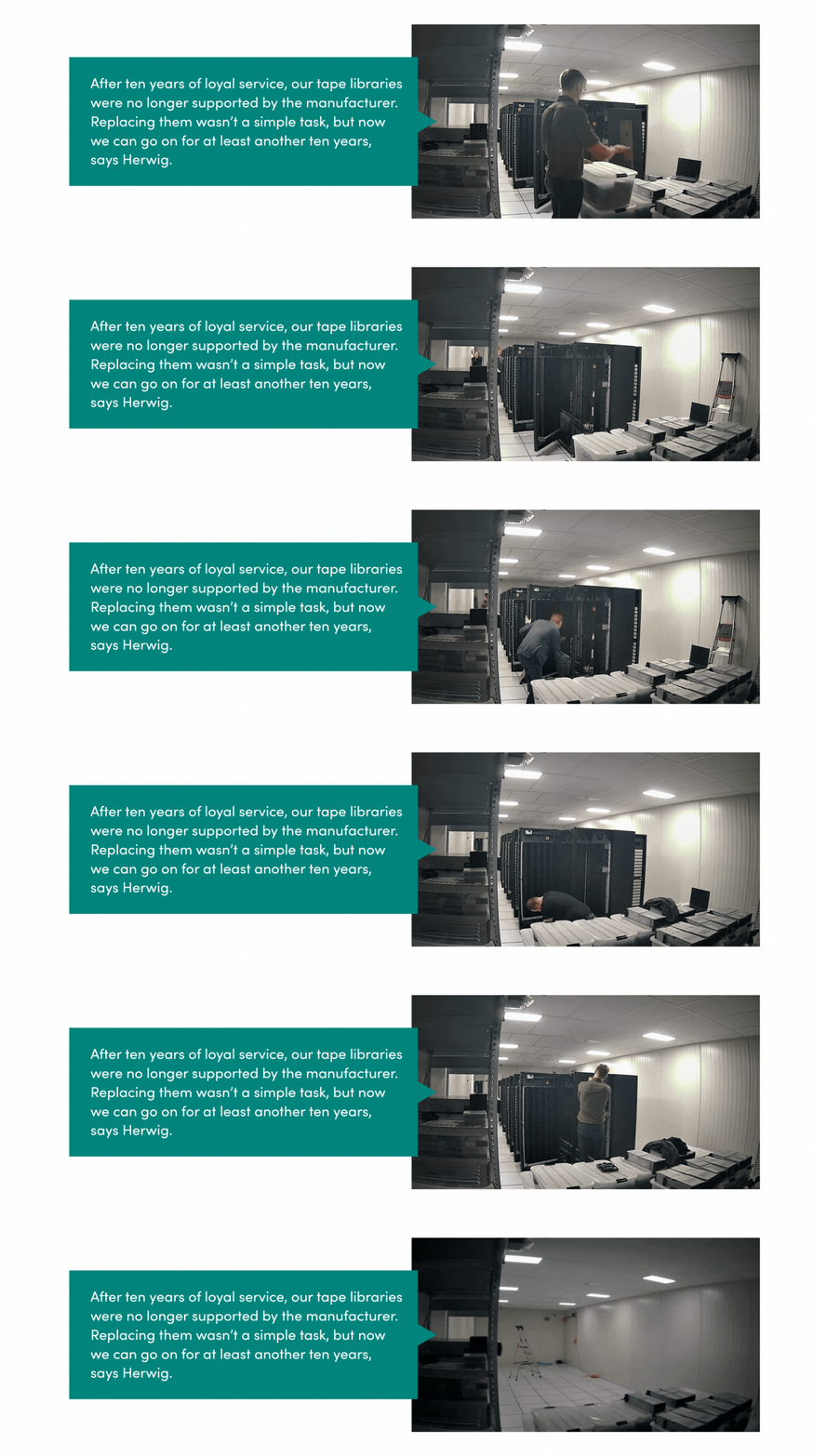
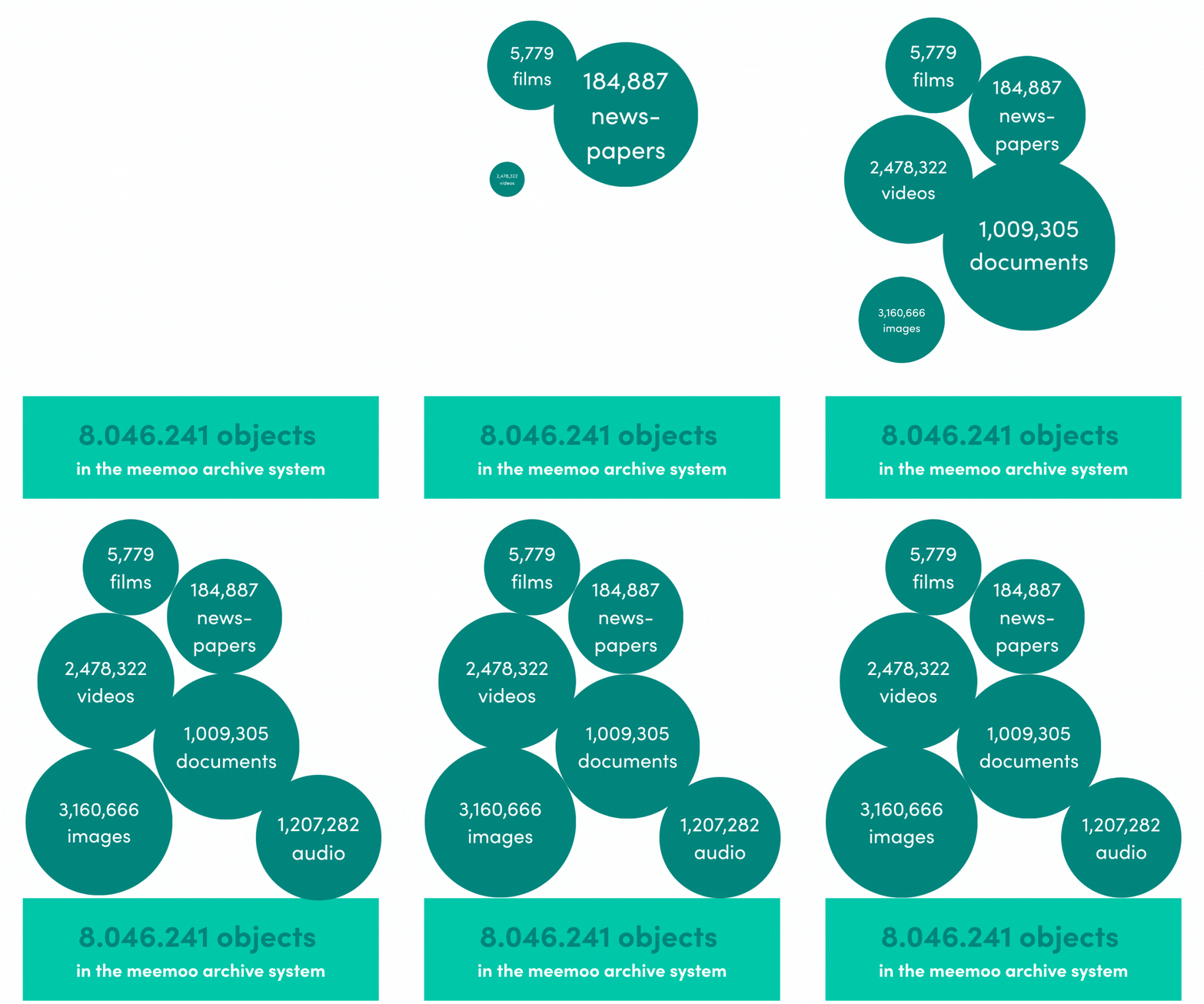
As an organisation, we sit on a mountain of heritage: we preserve digital material for more than 160 organisations, managing one of the largest digital archives in Flanders. By the end of 2024, the meemoo archive system held 28.7 petabytes of data – that’s 8 million objects we preserve sustainably. If you were to consult all of this consecutively, you’d be busy for multiple lifetimes!
Last year, 730,000 objects found their way into our archive system – not only through the aforementioned digitisation projects but mainly from digital intake. We welcome born-digital and previously digitised material from our content partners for sustainable preservation through this channel. In 2024, we worked hard to provide our partners with the tools to deposit their material more easily with us – on one hand by standardising our technical processes (hello SIP specification for newspapers and audiovisual material!), and on the other by taking steps towards a user-friendly intake tool to be built in 2025.
Supporting collection registration and management
Besides digitisation and preservation, we also support our partners in the daily management of their collections, e.g. by assisting them with the registration and management of their heritage, but also by focusing on richer and higher-quality metadata.
(Almost) a new heritage database
2024 was an important year for the heritage databases project. We have been busy building a new collection management system with a collection window to replace the outdated databases, Erfgoedplus and Erfgoedinzicht. And that’s no easy task. Did you know that over 1,200 Flemish organisations rely on these systems? The year started well – we chose a supplier and dived straight into the collaboration. The chosen system had to be configured to the users’ needs, the first training sessions and documentation took shape and – of course – we faced a mountain of data migrations. Along the way, the plan to welcome the first users in 2024 proved a bit too ambitious. Remember the introduction? There you have it: the first bump.

(Psst... Completely outside the scope of this annual report, we can reveal that the collection management system for the new heritage database is live in 2025 and, at the time of writing, more than 250 organisations are already using the system. On to the next wave!)
Me-ta-da-ta
Do we need to spell it out? Metadata plays a key role in managing and making archival material accessible. If a file is not or poorly described, it’s difficult to find – and that hinders exchange and reuse. While our partners do a mountain of work to better describe their archival material, we support them by focusing on metadata management, standardisation and metadata enrichment.
For several years now, we’ve been building an improved metadata infrastructure, with the meemoo knowledge graph at its core. This flexible description model, which looks like a wide-ranging network of connections, aims to provide a more sustainable basis for the intake and unlocking of material. In 2024, the metadata from our archive system found its way to the graph.
Describing an entire archive manually isn’t done very easily. And that’s why we’re employing artificial intelligence to create and enrich metadata. In the GIVE project, we previously engaged in speech, entity and facial recognition for our partners in culture and government. In the Shared AI project, it was the media sector’s turn. These were the results by the end of 2024:

Uniformity is important when you want to exchange collections and metadata on the web. But data often comes from different systems and doesn’t always have the same format or meaning – so good agreements are needed. Enter: data standards. They provide context, coherence and better exchangeability. Specifically for the cultural heritage sector, there’s the OSLO Cultural Heritage standard. Since early 2024, we’ve taken on the role of product owner and lead the OSLO Cultural Heritage Working Group.
Making digital heritage accessible
Preparing archival material for the future is one thing; encouraging its reuse is another. Together with our content partners, we look for ways to bring their rich digital collections to the public. We support them in making their material available through their own platforms and initiatives, and we also make it as publicly available as possible ourselves – for education, research and professional reuse, or simply to enjoy.
Hetarchief.be: starting point for research
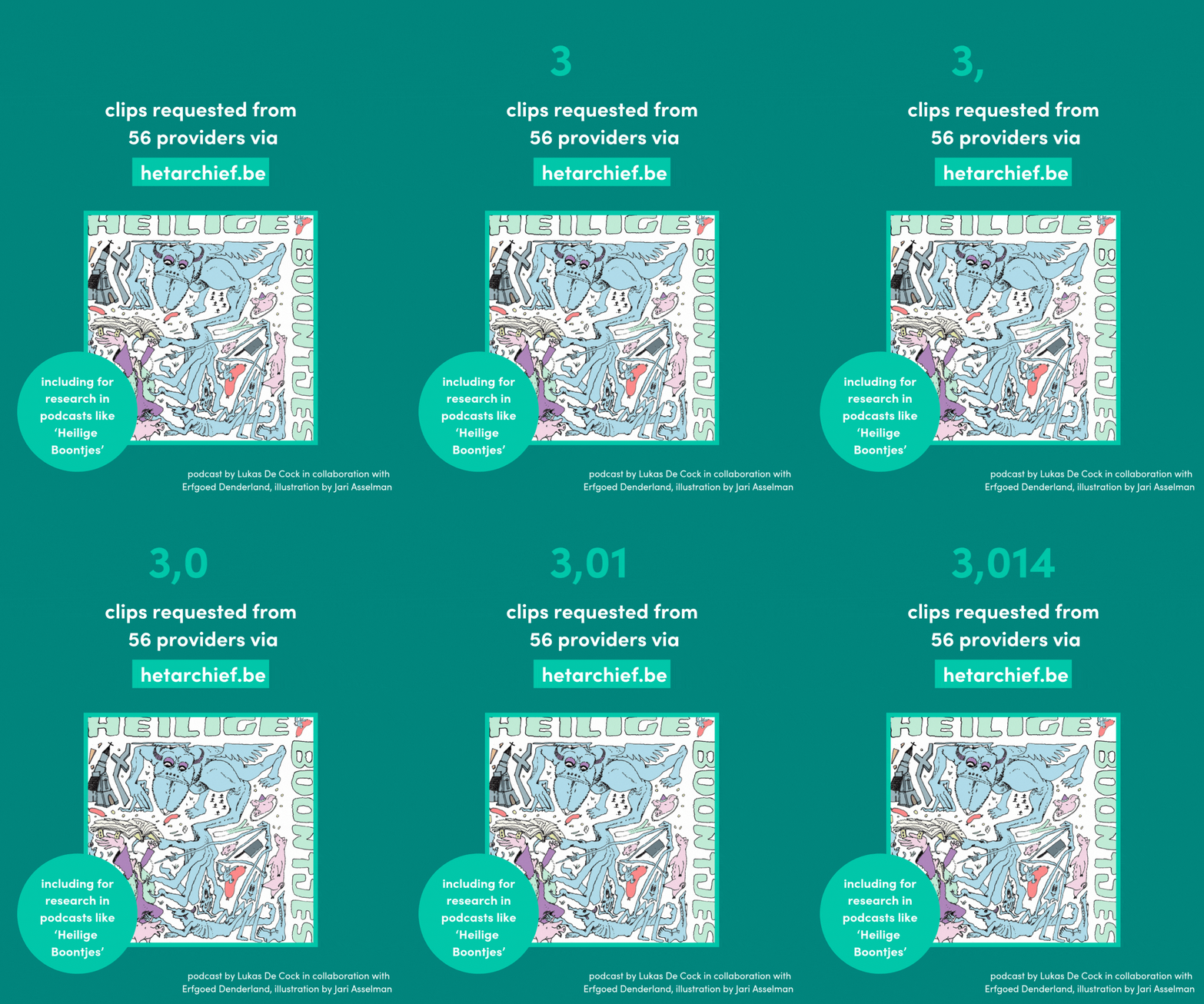
On hetarchief.be (link in Dutch), we make the descriptions of over 2 million audiovisual clips from our content partners’ archives searchable for everyone. If you spot an interesting clip, you can easily request it from the provider. In 2024, we saw a significant increase in the number of user accounts and requested clips – a direct result of our marketing efforts, including a student campaign (link in Dutch) and more focus on SEO.
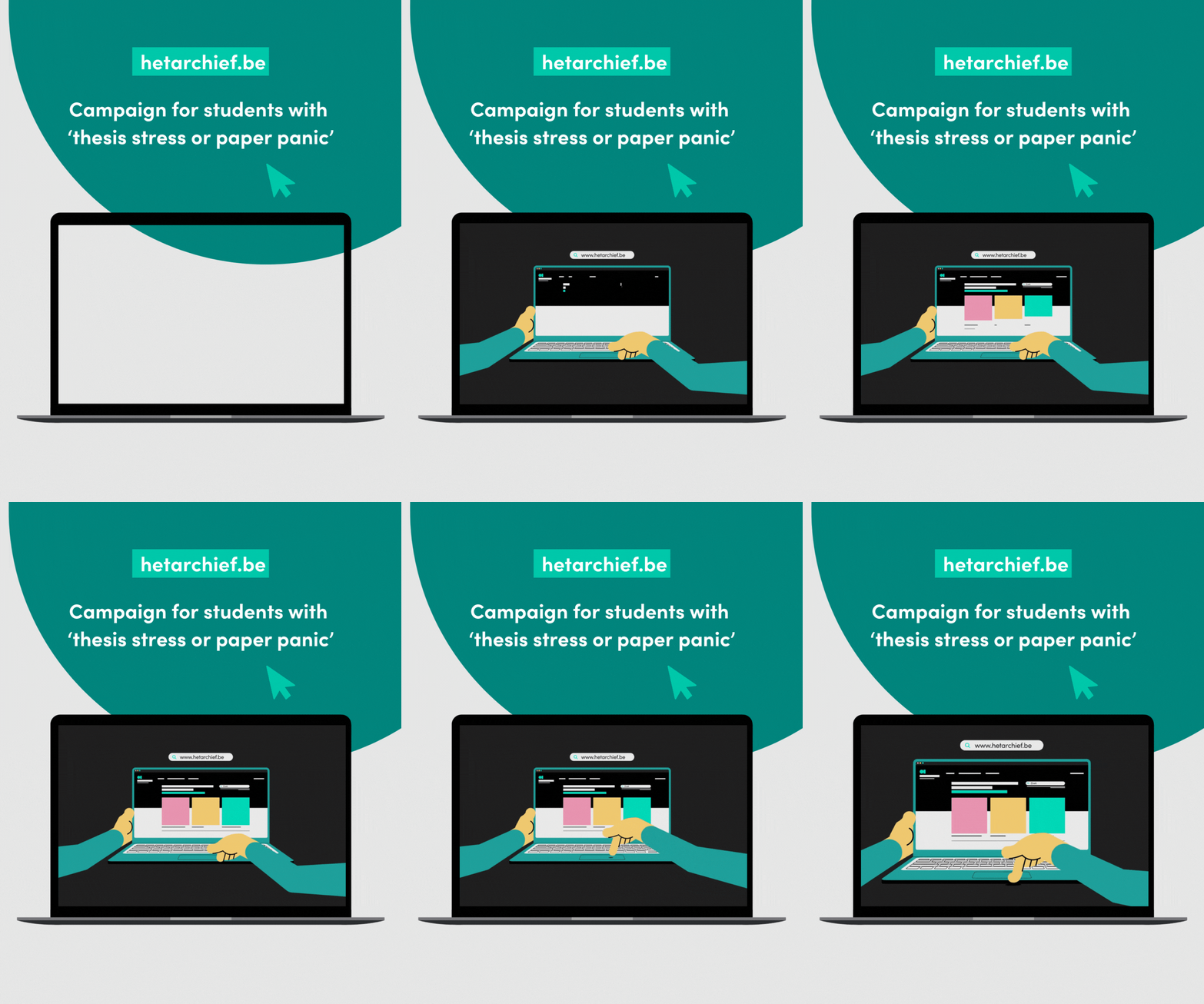
For content partners and their on-site visitors, hetarchief.be has even more to offer. And there’s more on its way. In 2024, we worked hard to make digitised newspapers available on the platform. Bump two: check.

At the end of 2024: no newspapers on hetarchief.be yet, but a team effort to be proud of – so you can browse and enjoy online to your heart’s content in 2025.
Twice as much art
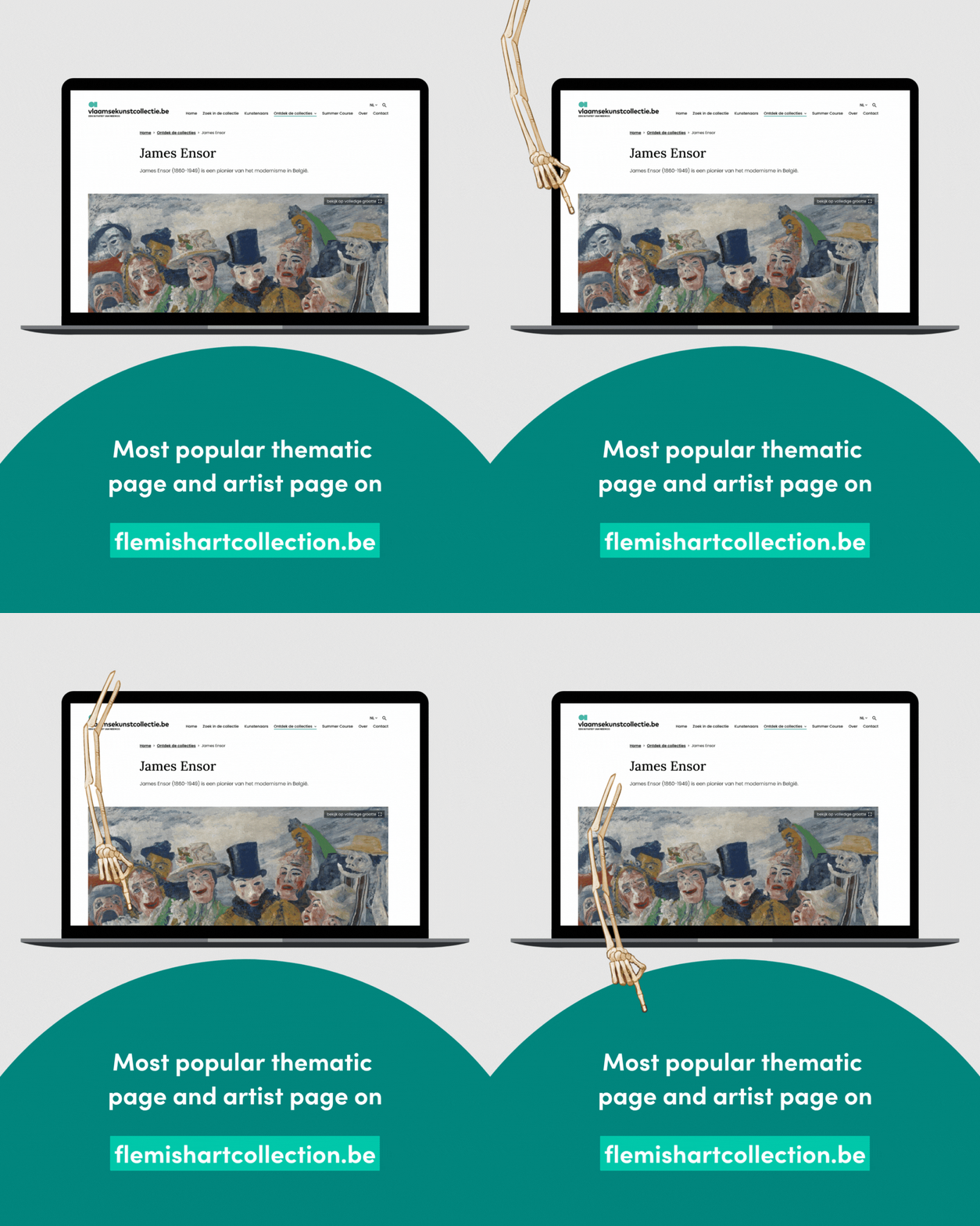
A happier outcome for our art platforms. Yes, plural! With the integration of the former Flemish Art Collection into meemoo, we gained an additional art platform under our wing in 2024 – so we now offer the public an even broader view of art: viewing and downloading can be done as usual on artinflanders.be, and for in-depth stories, it’s all happening on flemishartcollection.be.

Increasingly busy on The Archive for Education
We took an important step for our educational platform in 2024. After counting nearly 200,000 teachers, student teachers and secondary school students on The Archive for Education in the 2023-2024 school year, we opened up access to primary school students as well the following academic year. Guided by their teacher, they can now work with videos and audio clips that connect to their world. Taking steps in media literacy at a young age: check!
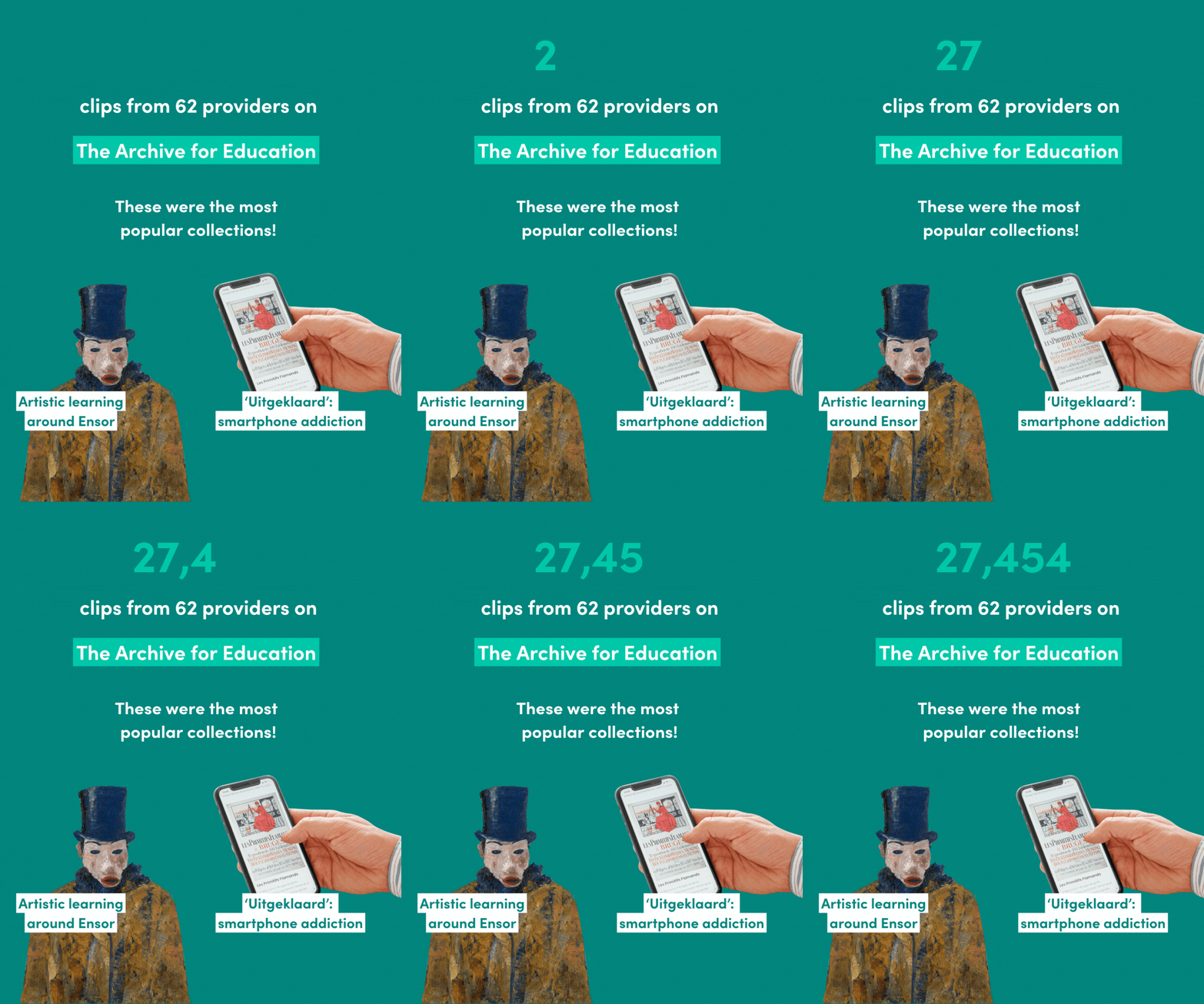
With The Archive for Education, we offer an increasingly rich and directly usable audiovisual offering for the classroom: as of 2024, the image database contained over 27,000 clips from 62 archives. The material from our content partners doesn’t simply end up there – our education editorial team dives into their archives, and selects and contextualises relevant clips tailored to education. You can find out here (link in Dutch) how that works.

*figures from the 2023–2024 school year
We also supported teachers in their teaching practice by:
providing ready-made teaching materials, such as the educational package on critical thinking and historical awareness that we developed with Artevelde University College, tailored to primary and first grade B-stream in secondary education.
collaborating with organisations like VRT, Smartschool, KlasCement and FARO in the context of the elections, Heritage Week and more.
organising 74 workshops to guide teachers through our educational platform and offerings.
IIIF for our partners
Sharing collection material interactively and richly with the outside world is made possible with IIIF (link in Dutch). This standard simplifies the exchange of images between different systems. To make it easier for our content partners to release their collections via IIIF, we have been offering an IIIF service since 2024. They choose the images, and we provide the infrastructure.
We also broadly encourage the use of IIIF. The IIIF Fridays, which we use to inspire the heritage sector – together with Ghent University Library and Bruges Public Library – reached their tenth and eleventh (links in Dutch) editions in 2024. So how do you apply IIIF in practice? Our accessible ‘IIIF in Action’ sessions attracted many interested parties. And the participants of our digital storytelling afternoon (link in Dutch) can attest to the fact that IIIF lends itself well to storytelling.
Gathering and sharing knowledge, and giving advice
We don’t keep the expertise we gain along the way to ourselves. Together with the broader cultural sector, we’ve been gathering insights into digital heritage processes for nearly 15 years on projectcest.be. Since 2024, we’ve been building on this with a renewed knowledge database. Hello kennisbank.meemoo.be (link in Dutch)!
What knowledge do we gather and share? The following domains – with some examples highlighted – provided focus in 2024.
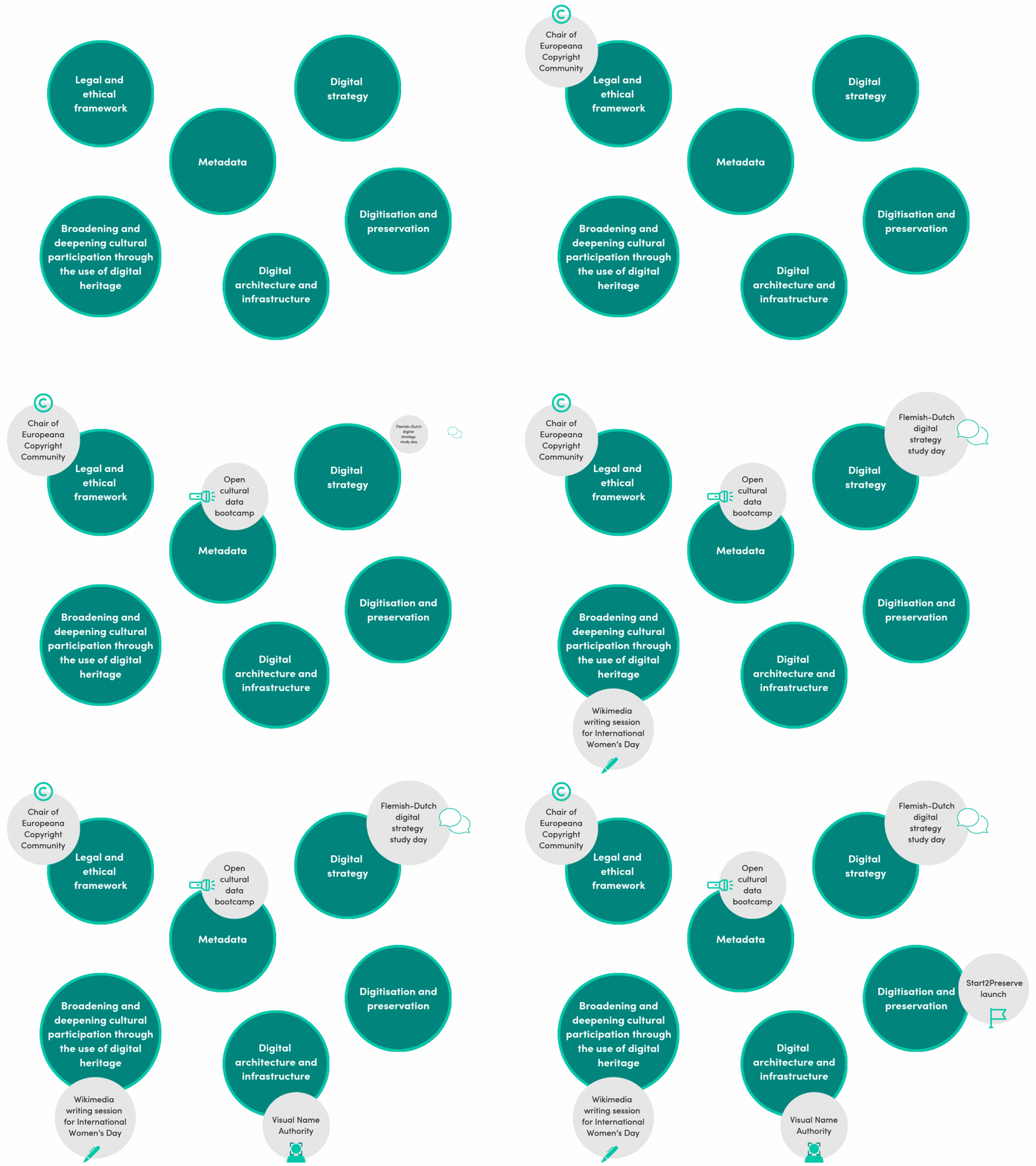
In 2024, we supported the sector and broadened our own knowledge by:
collaborating on 11 subsidised projects with other cultural organisations, such as the Visual Name Authority project, where we are building a visual personal name list.
setting up dozens of training activities for the broader heritage sector and our (content) partners, including the seventh edition of the open cultural data bootcamp (link in Dutch).
taking a leading role in various peer, steering and working groups, such as the social media archiving practice network.
helping 155 people from the broader cultural heritage sector by providing advice in responses to 260 helpdesk requests.
Anyone involved in digital heritage processes and in need of advice can turn to our virtual helpdesk. In 2024, for example, we received an archiving question about the Pro-Palestinian occupation of a KU Leuven building. We helped the student (the archive creator) and – in doing so – also Amsab Institute for Social History (the archive we directed them to):


Giving and taking knowledge
Under the motto ‘give and take’, we gratefully use the knowledge available on the Wikimedia platforms – and conversely, both we and our partners also contribute by making heritage data and images freely available on Wikidata and Wikimedia Commons. These efforts did not go unnoticed in2024. Our ‘exceptional commitment to free knowledge’ earned us the Verbindingsprijs (‘Connection Prize’) from Wikimedia Netherlands.
An international story
The knowledge we share extends beyond Flanders. In 2024, we crossed borders multiple times to share experiences at international conferences (link in Dutch). And our international colleagues also easily found their way to our digital helpdesk: 30 questioners from outside Flanders sought our advice. For our training sessions, we frequently collaborated with the Dutch Digital Heritage Network, for example during the Flemish-Dutch digital strategy study day (link in Dutch). Public Domain Day – where we annually provide a platform for heritage organisations to showcase their actions in opening up public domain material – also had a strong international component in 2024.
The highlight, however, came in the autumn – with iPRES, we brought the international preservation community to Flanders for five days. Organising this most important international conference for digital preservation required a tremendous effort from our team, but together with Het Facilitair Bedrijf (Digital Archives Flanders - a division of the Agency for Facility Operations from the Flemish Government), Ghent University and VRT, we made it a record edition. Over 900 attendees and an endless stream of knowledge: that’s impressive! Even beginners in digital preservation could benefit, as we organised a first Start2Preserve meeting (link in Dutch) on the sidelines of iPRES – immediately the starting point for a new practice network.

© Michiel Devijver
A DNA of collaboration
We are here to help our partners – and they are also there for us. In 2024, we collaborated with 184 partners who entrust us with their content. Without their dedication and expertise, this annual report would look entirely different.
What we do and how we do it is deeply rooted in the needs of our partners. Their input guides projects and new developments – and more broadly, our policy plan that we will present to the Flemish government in 2025. To inform our partners and engage in dialogue with them, we organised a partner event, three sector moments and various working groups in 2024.


Behind the scenes
All of the above – and much more that couldn’t be captured in these 2,500 words – was made possible by the dedication of around 70 permanent team members, seconded teachers and interns. A big thank you is in order!
We conclude with a look at our finances. In 2024, our revenue amounted to €9,913,954, and our expenses were €9,942,798. So there was a small loss of €28,844. The biggest expenses were: Personnel (€4,481,529), the archive system infrastructure (€983,013), the heritage databases project (€648,804), and digitisation (€580,041).

© meemoo
Always up to date with meemoo?
Sign up for our newsletter, or follow us on social media (in Dutch):


