
Hermes: bringing audio and video to the people
Until recently, thearchives.be offered millions of descriptions of Flemish audiovisual material and thousands of historic newspapers. By the end of 2026, thanks to the Hermes project, something special will be added: for the first time, you’ll be able to watch and listen to thousands of these clips yourself. It’s a first for Flanders: never before has audiovisual archive material been made accessible on this scale. How was the selection made? And what can you discover at thearchives.be today? Here’s how it all came about.
Making audio and video accessible to the public is just one part of the Hermes project. Read about the other work we’re doing to make material from the recent and more distant past easier to find, share and reuse.
Challenge
Making thousands of hours of video and audio accessible? Thanks to digitisation work over recent years, a huge wealth of audio and video has been preserved digitally. But archiving something doesn’t automatically make it accessible. Rights proved to be a major challenge, as a single clip can involve several parties: the programme-maker, broadcaster, actor, presenter or writer, for example. Add music to the mix and the rights puzzle can quickly become very complex – especially when, after many years, it’s no longer clear who owns which rights. Detailed rights research or rights clearance may be possible for a single recording, but it’s not feasible on a large scale.
Our role
As the project’s lead applicant, we took responsibility for its coordination and delivery. Together with our content partners, we delved into their archive material and worked out rights solutions to make as much of it as possible available to the public. That meant a great deal of work behind the scenes: researching and cleaning up rights information, reaching agreements with rights holders, holding many discussions, drawing up contracts, registering material and providing context.
The collaboration was genuinely complementary: we brought the necessary legal and technical expertise to the table, while our partners brought their knowledge of the collections and the rights involved.
- Stijn Planckaert, Hermes project lead

We also developed thearchives.be further, making it easy for visitors to explore the selection. With the relevant rights information now available, they can also see what they’re allowed to do with the material.
Approach
Without input from our partners, there would be no material available to the public. So two strands of work ran side by side as we selected the material: what did our content partners consider relevant to share, and what could legally be made available online? We also had to consider what was achievable within the scope of the project.
Working with our parties
Every content partner had the chance to take part, with a particular focus on media partners. Close consultation led us to identify the following key areas:
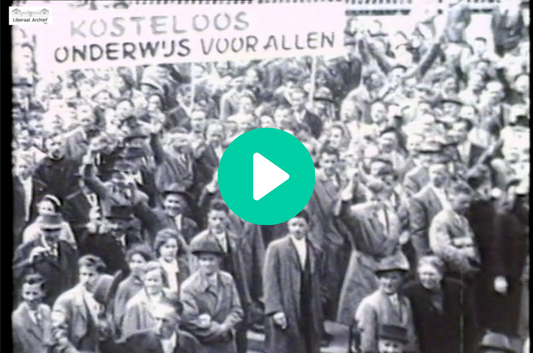
Schoolstaking - Liberas
In the past, political and socio-economic organisations were given airtime on public broadcasters. Several cultural archives now preserve material from those broadcasts and saw real value in bringing it back into view.
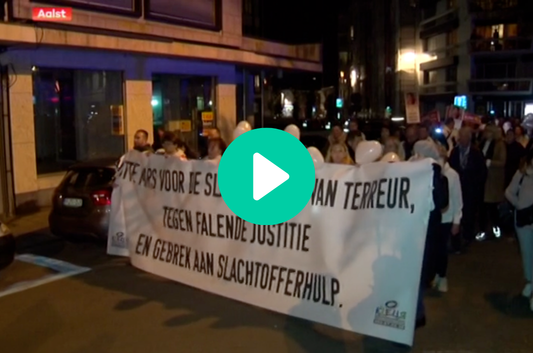
Witte Mars Aalst - TV Oost
Another major opportunity was to share complete news broadcasts from the early years of several regional broadcasters, from 1993/94 onwards. This is fascinating material, with rights often held by one clear party: the regional broadcaster itself.

Laatste weerbericht Armand Pien - VRT
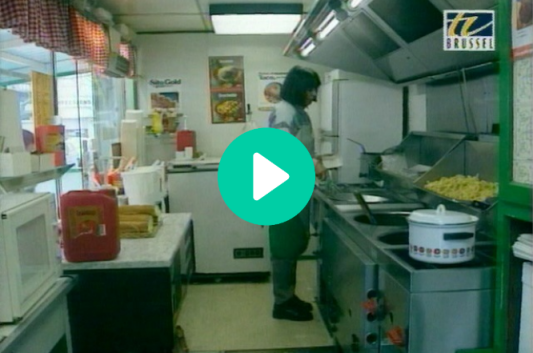
Frietkotcultuur - BRUZZ
Another promising avenue was to unearth remarkable stories and themes from across the regions. To avoid relying on clichés, we involved local heritage organisations in the process. The material itself comes mainly from regional broadcasters’ collections, with additional clips from DPG Media and VRT.

This collection opens up part of the Flemish public broadcaster’s oldest audiovisual heritage, including unique recordings dating from the 1930s to the 1960s. The selection includes iconic speeches, interviews with well-known figures, children’s programmes and reports.
You can also find sessions of the Flemish Parliament, performing arts material, atmospheric amateur footage featuring the writer Hubert Lampo, and more at thearchives.be.
Legal research: a step-by-step process
Could all of it be made available online? Together with our legal partner Timelex, we explored what was possible. In short, wherever we could, we sought direct permission from known rights holders. For collections with more complex rights situations, the out-of-commerce works scheme proved a valuable tool. Where the material required it, we made additional agreements with collecting societies. Sometimes the solution was a combination of approaches.
🚪 The out-of-commerce works scheme opens doors
This European scheme gives heritage institutions the opportunity to bring material that is no longer commercially available back into view. Think of a clip you can no longer watch on streaming services. The scheme offered an interesting way for the Hermes project to make material accessible on a larger scale, rather than one item at a time. It’s also pioneering work: this is the first time in Belgium that the directive has been used to make archive material available to the public.
Ready to explore on thearchives.be
We also got thearchives.be technically ready to show material to the public, with a focus on giving visitors a good experience. We improved the existing search tools and built a new discovery section. Visitors can browse by theme or let themselves be surprised by unexpected finds.
At the same time, we’re careful to preserve the unique character of the archive material. Historical images need context to help you understand them in the spirit of their time. We work with experts and collection holders to provide context wherever it matters most.
Thousands of clips soon to be discovered by everyone? We wanted a place that would guide visitors through them: somewhere they could not only search, but explore by theme and stumble across unexpected gems.
- An Seurinck, Interaction Officer

Partners
At thearchives.be, you can watch and listen directly to a selection of material from 26 partners:
Media




Culture










Government

This project is part of the Flemish Government’s Resilience Recovery Plan.